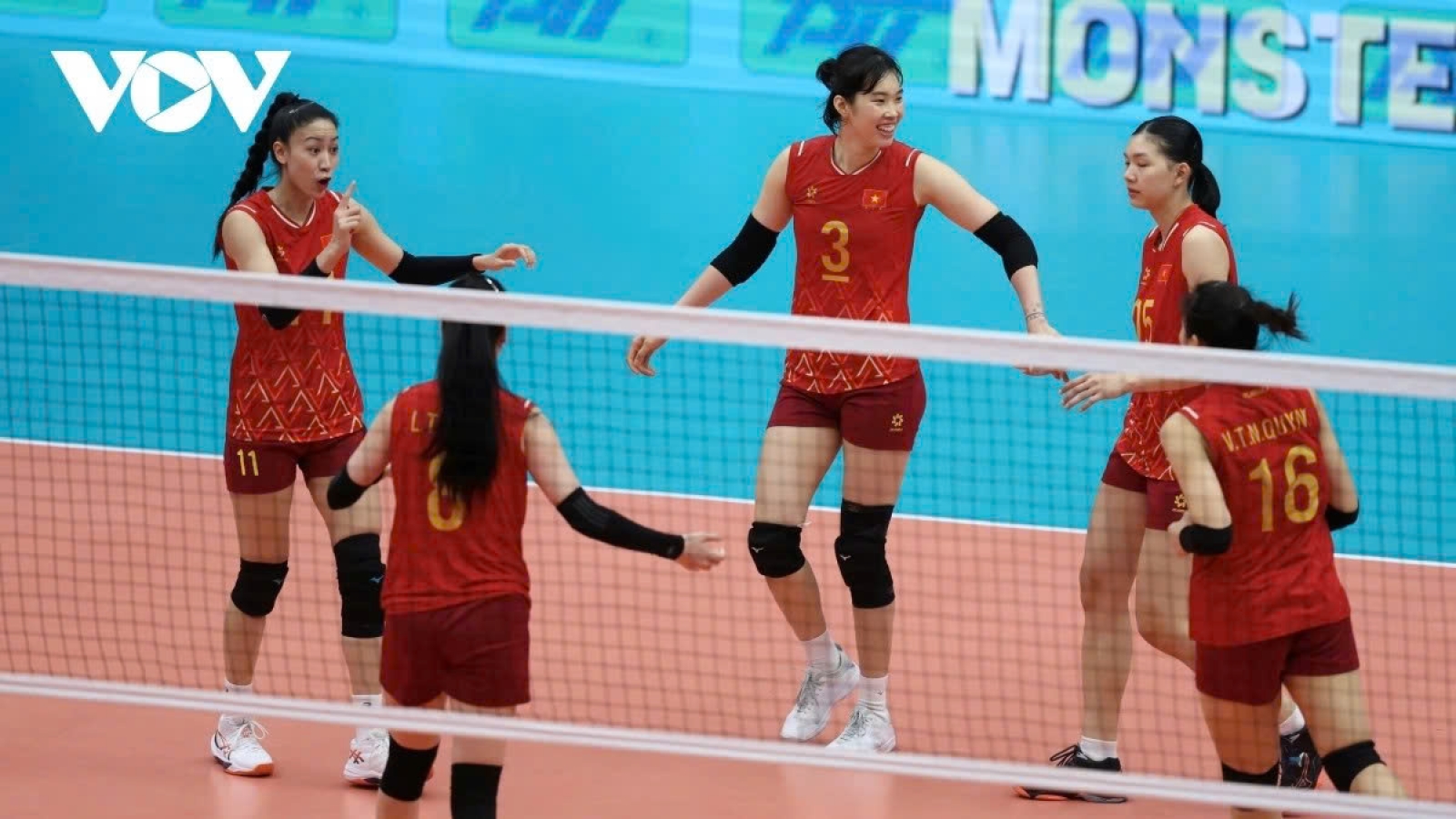
AVC Cup 2026: Vietnam beat Kazakhstan, securing bronze medal

VOV.VN - Vietnam have closed out their AVC Women’s Volleyball Cup 2026 (AVC Cup 2026) campaign with a bronze medal on June 14, defeating Kazakhstan in straight sets in a commanding third-place playoff performance.
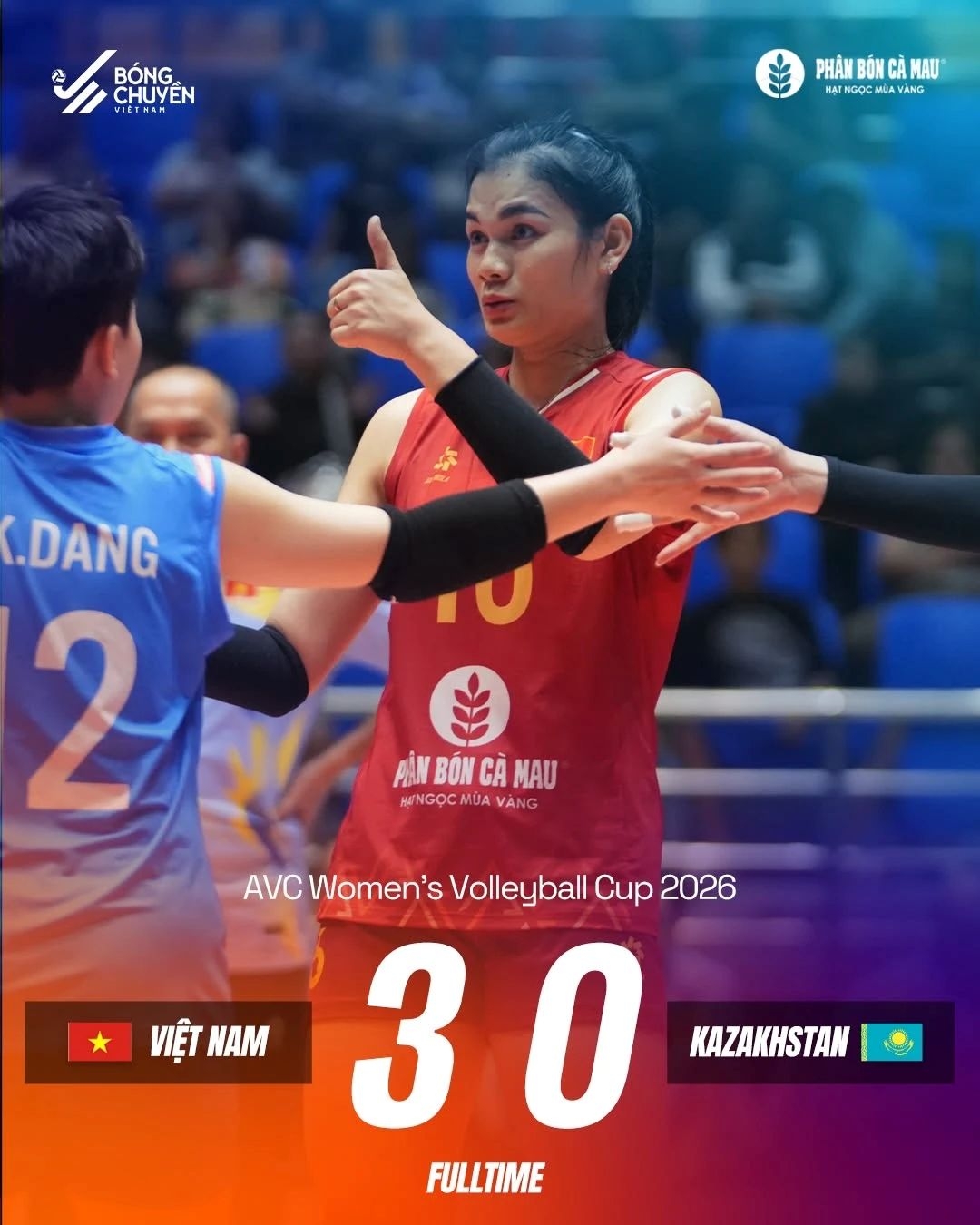
The victory provided a measure of redemption after Vietnam had previously suffered a five-set defeat to the same opponents during the group stage. It highlighted the team’s ability to adapt under pressure and respond strongly after their semifinal loss to the Republic of Korea.
From the opening set, Vietnam displayed a markedly different approach compared with their earlier meeting against Kazakhstan.
Coach Nguyen Tuan Kiet’s side adopted a faster attacking rhythm and relied on effective blocking to neutralise Kazakhstan’s key offensive threats. Middle blocker Bich Thuy and outside hitter Le Thanh Thuy played important roles at the net, helping Vietnam establish control early in the match.
Strong reception and disciplined execution allowed Vietnam to maintain a comfortable lead throughout the first set before securing a 25-17 victory.
The second set further demonstrated Vietnam’s tactical superiority. The team generated multiple scoring runs through well-organised attacks, while Kazakhstan struggled with both reception and defensive coverage. Vietnam dominated the set from start to finish and cruised to a convincing 25-12 win.
Kazakhstan attempted to mount a response in the third set and briefly kept pace during the opening exchanges.
However, Vietnam’s captain Tran Thi Thanh Thuy once again proved why she is the team’s most influential player. Her powerful and accurate attacks helped Vietnam regain momentum midway through the set and maintain control during the crucial stages of the match. With Thanh Thuy leading the way, Vietnam closed out the set 25-19 to complete a straight-sets victory.
The result may not have matched Vietnam’s recent championship success, but it is a significant achievement in an increasingly competitive Asian volleyball landscape.
Before this tournament, Vietnam had established themselves as one of the dominant teams in the competition, winning multiple consecutive titles and consistently finishing on the podium. The bronze medal therefore represents not only a respectable finish but also evidence of the team’s ability to stay among Asia’s leading contenders despite growing competition.
Equally encouraging was the manner of the victory. Vietnam demonstrated improved reception, more effective blocking and greater tactical flexibility than in their earlier encounter with Kazakhstan. The balanced performances of key players, including Thanh Thuy, Nhu Quynh and Kim Thoa, gave the team greater stability and made their attack less predictable.
While missing out on the final was undoubtedly disappointing, Vietnam’s response in the bronze-medal match offered valuable insight into the squad’s development. Rather than allowing the semifinal defeat to define their tournament, the team regrouped quickly, adjusted their tactics and produced one of their most complete performances of the competition.

Vietnam women's volleyball fall narrowly to Kazakhstan in AVC Cup 2026
VOV.VN - Vietnam women's volleyball team suffered a narrow defeat to Kazakhstan on June 12, finishing second in Pool B of the AVC Cup 2026 after missing out on top spot despite coming close to victory.