Typhoon Koto forecast to weaken as Central Vietnam put on alert

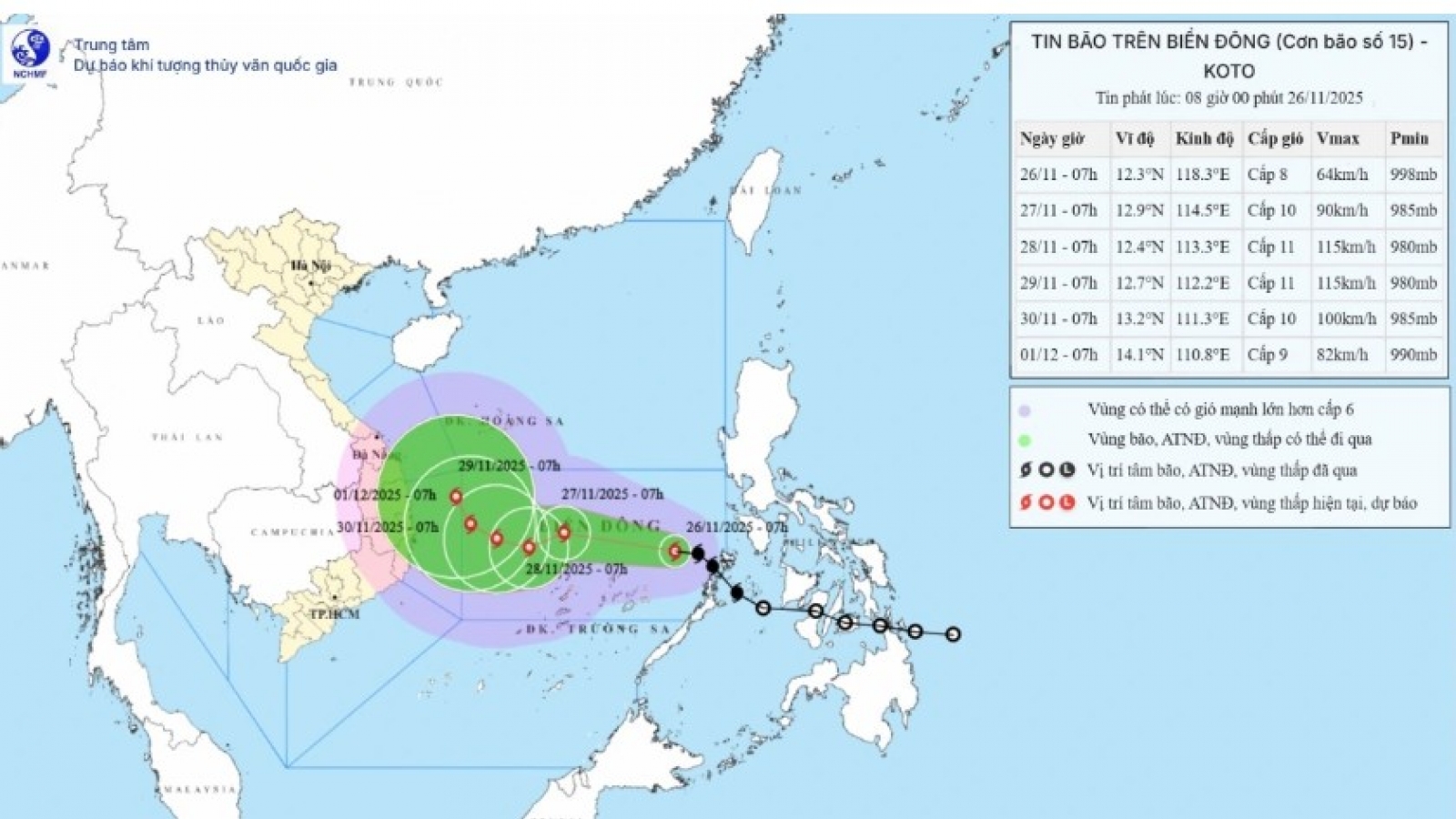
VOV.VN - Typhoon Koto, with sustained winds of 118–133 km/h and gusts of 167–185 km/h, is forecast to gradually weaken from November 28 before moving toward Vietnam’s central coastal waters.

According to the National Centre for Hydro-Meteorological Forecasting, at 7 p.m. on November 27, Koto was located about 220 km northwest of Song Tu Tay Island, moving westward at 5–10 km/h.
Over the next 24–48 hours, Koto is expected to steadily lose strength, with winds near the centre decreasing to 87–101 km/h. The storm will also slow down to 3–5 km/h and gradually shift its track toward the northwest, heading toward the south-central provinces.
The forecasting centre warned that starting early on November 28 and throughout the day, offshore areas from Gia Lai to Khanh Hoa provinces will experience winds of 39–61 km/h, increasing to 62-74km/h. Waves are anticipated to reach 5–7 m, creating rough and dangerous sea conditions.
All vessels operating in these areas may face thunderstorms, strong winds, and large waves.
On the same day, the Ministry of Agriculture and Environment issued an urgent directive to six central provinces and cities, namely Da Nang, Quang Ngai, Gia Lai, Dak Lak, Khanh Hoa, and Lam Dong, urging them to implement measures to ensure the safety of sea dikes and coastal embankments in response to Typhoon Koto.
The ministry stressed that Koto remains very strong in the East Sea, with complex developments. Its direction and intensity may continue to change in the coming days.
The typhoon may directly impact areas from Da Nang to Lam Dong – the areas that have recently suffered historic flooding and are still recovering from severe damage. Authorities warned of a heightened risk of landslides and breaches along sea dikes and embankments. In addition, the storm’s circulation is expected to bring heavy rain that could further compromise dike safety.
Local authorities have been instructed to closely monitor the storm’s progress, rainfall, flooding, and the condition of dikes and embankments. They must review, update, and implement emergency reinforcement plans for vulnerable sections, especially coastal dikes facing the sea. Ongoing repairs must be expedited, and areas showing signs of erosion must be strengthened to minimise damage in the event of landfall.
According to the National Civil Defence Steering Committee, coastal provinces and cities from Quang Tri to Ho Chi Minh City have notified and accounted for 48,380 vessels with 246,758 crew members, informing them of Typhoon Koto’s developments and projected path so they can proactively relocate, avoid danger, and move out of the danger areas.
The Ministry of National Defence has mobilized more than 150,00 officers and soldiers, along with 3,085 vehicles, 489 specialised vehicles, 646 ships, 1,239 boats and canoes, and 6 helicopters, all standing ready for rescue and emergency response operations.
Typhoon Koto intensifies rapidly, PM orders highest-level preparedness
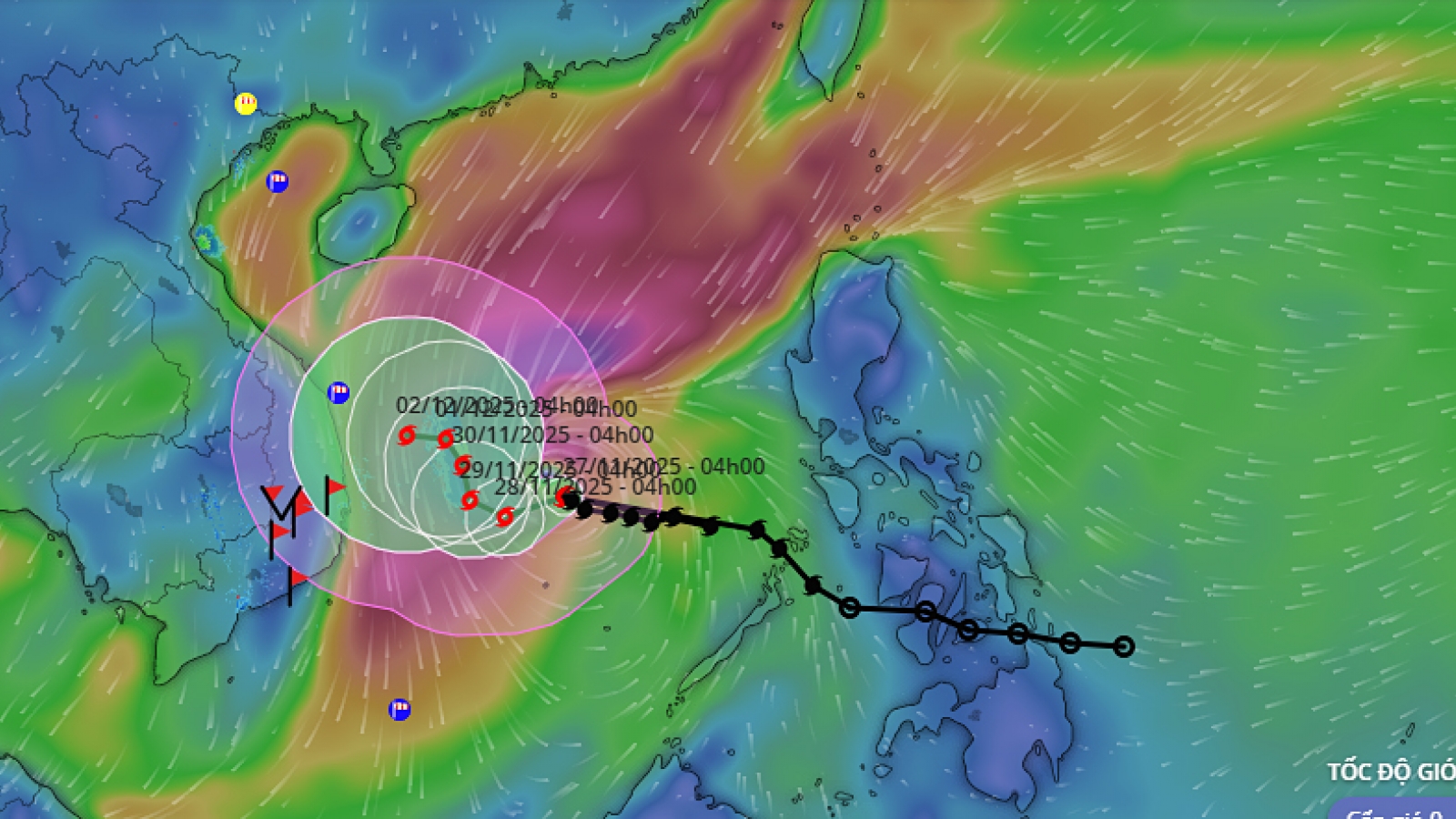
VOV.VN - Over the past 24 hours, typhoon Koto that has moved into the East Sea and is heading toward central Vietnam has intensified by four levels, becoming one of the fastest-strengthening and most dangerous storms of the year.